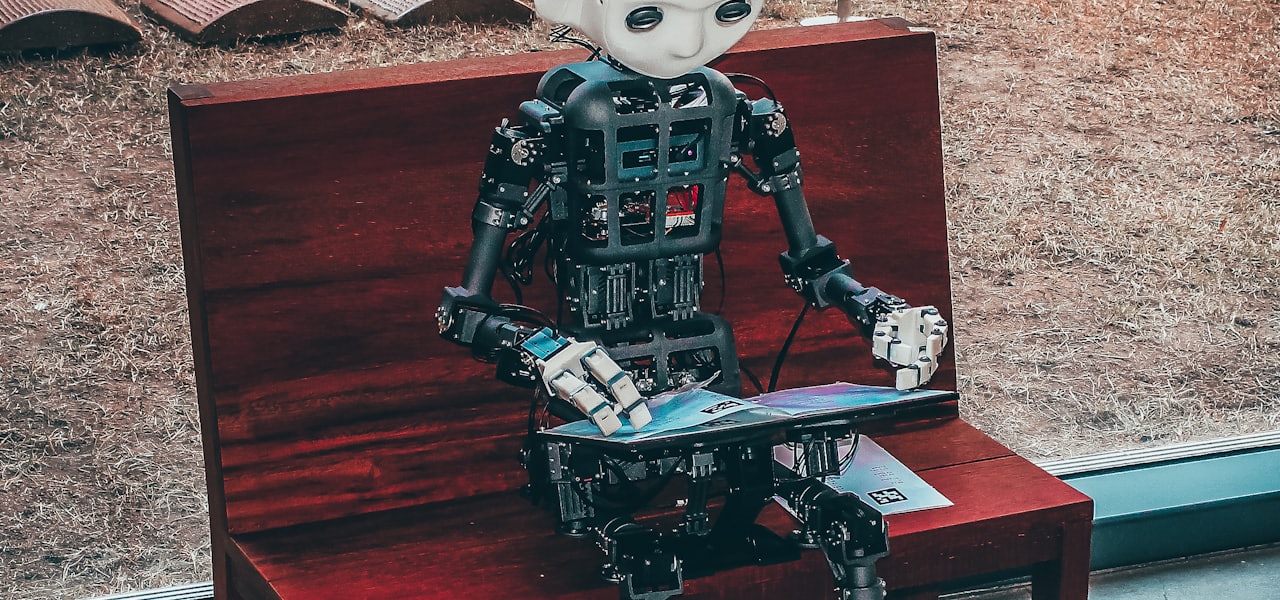
Agent verification is activity to gain assurances that purposeful artificial constructs act in accordance with their specifications. While primitive forms of inorganic agents have been used in manufacturing for centuries, the study of artificial agents did not begin until the mid 20th century. Foundational work on such agents was closely bound with the emergence of artificial intelligence as an academic discipline. Early agents deployed for industrial control systems and in computing were often controlled by quite simple logic however, not involving artificial intelligence as such. When deployed as part of a multi-agent system, even such simple agents could require special agent orientated testing methods, as their collective behaviour was challenging to verify with traditional testing techniques. Difficulties in providing assurances that agents will not behave in dangerous ways became more prevalent after the introduction of LLM agents, especially after the rapid acceleration of their deployment in 2025. The verification of agent behaviour can be conducted by formal or informal methods. Informal verification requires less mathematical skill. But when agents are part of systems where errors have significant risks — such as danger to human life, environmental damage or major financial loss — formal verification is preferred. Both regulators and system designers themselves like formal verification as it provides a high degree of mathematical certainty. It is not however always possible to formally test all aspects of an agent based system's behaviour, especially where newer LLM based agents are concerned, due in part to their high degree of autonomy. Accordingly, agent verification for low impact deployments might be carried out only with informal methods, while for high impact deployments, it may be performed with a mix of formal and informal techniques. == Terminology == In academia, the term agent verification is often defined to mean activity concerned with gaining assurance that the agent behaves in accordance with its specification - whether by processes such as testing or simulation. 'Verification' is typically contrasted with 'validation', the latter meaning activity concerned with checking that the specification itself meets user or real world needs. Such definitions are not universally adhered to however - for example, in some workplaces and documents, the words 'verification' and 'validation' can be used synonymously. Efforts to gain confidence in Agents have intensified sharply since 2025 due to the rapid roll out of LLM agents; different terms are sometimes used in the commercial sector. Here the term 'agent verification' can be used in the same sense as it is in academia, but sometimes the same activity can be covered by more ambiguous and wider ranging terms such as 'Agent governance' , 'Agent observability' or 'AI agent policing'. == History == === Classical agents === The theoretical underpinnings for artificial (inorganic) agents emerged in the mid 20th century, with establishment of cybernetics and artificial intelligence. Oliver Selfridge's 1958 Pandemonium - A Paradigm for Learning paper was an important early theoretical contribution in establishing agent oriented architecture. Practical implementations of agents for real world applications began to become widespread in the 1990s, after the introduction of the belief–desire–intention software model (BDI), and agent-oriented programming. Pure digital agents were deployed in computer infrastructure for purposes such as monitoring, while agents connected to real-world sensors and actuators were increasingly used in industrial control systems. While the concept of artificial agents was interwoven with early artificial intelligence studies right from the start, early agents lacked general purpose reasoning capabilities, often only having simple if then logic. Even a device as simple as a thermostat, which has a sensor and a means of acting, can be considered a proto agent in this sense. Verifying the behaviours of a simple single agent system is not generally especially difficult, but it can be a different matter when several simple agents coexist in the same system. Craig Reynolds's work on boids showed that relatively complex, "intelligent" behaviour can emerge from a number of such simple agents working together in a Multi-agent system (MAS). By the 1990s, even the behaviour of a single agent system could sometimes be quite complex; in accordance with the Belief–desire–intention software model, agents could have believes that might evolve over time. Agents were increasingly introduced that were controlled by quite large decision tree models, which had new vulnerabilities to adversarial attack. It was becoming increasingly apparent that traditional software verification methods had limitations for testing such agents, or even for the more primitive type of agents when they were deployed as part of a MAS. It was the use of agents for industrial control systems, sometimes associated with robotics, that lent urgency to the practice of agent verification. Informal testing might be acceptable for digital agents used say to monitor whether each of an organisation's computers are properly licensed. But with an increasing potential for faulty agents to result in a failure that might cause a large fire to break out at a chemical manufacturing plant, a botched medical operation, or even a crashed aircraft, the need to develop reliable means of verifying behaviour of such agents was considered urgent. The Foundation for Intelligent Physical Agents was established in 1996. From the late 90s, a growing number of industry and university based scientists began working on the problem, with researchers publishing papers on the verification of both single and multi agent systems. Much of this work showed how formal verification techniques like model checking could be used to gain a high level of assurance that agent based systems would conform with their specification. A 2018 systematic review covering 231 studies found that model checking was the most common technique for agent verification, with theorem proving the second most commonly used formal verification method. In the first two decades of the 20th century, agents run by AI became more common, with Siri and Alexa being well known examples. But such agents still lacked general reasoning capabilities and did not pose new pressing problems for agent verification. === General purpose reasoning agents === The advent of LLMs created huge potential for further use of artificial agents, as agents based on them could have general purpose cognitive abilities. Agents run by LLMs (and occasionally non-LLM foundation models) have similar vulnerability to adversarial attack as those run by decision tree models. The wider scope of actions for LLM agents has created new challenges for their verification, over and above those present for classical agents. For example, the LLM's neural network endows it with infinite domains, an especial challenge for traditional formal verification techniques. Academics began to study the problems involved in verifying LLM agents from 2018. Deployment of such agents began to accelerate in late 2023 after OpenAI's "function-calling" API was made available, and especially after Anthropic's late 2024 introduction of Model Context Protocol (MCP), a standardised way for LLM agents to gain contextual awareness, and to act on the world by calling various external tools. The rapid rollout of LLM agents following MCP's release has seen the task of agent verification receive increased attention within academia, and also from the private sector. In 2024 and 2025 several startups focusing on LLM agent verification have been founded in both Europe and the US to meet growing demand. == Approaches == === Formal verification === Formal verification involves proving the correctness of some or all aspects of a system using mathematical methods. Such methods can range from manual formal proof, to verification assisted with automated theorem provers like Isabelle. For agent verification, model checking is by far the most frequently used formal verification method; for pre-LLM models it was often complemented with techniques using computation tree logic. Another common method is theorem proving. Formal verification provides a higher degree of confidence than informal methods, but it is not always used, even when it is possible. Sometimes a person or organisation developing software agents won't have the necessary skills, or may not see it as worth the effort if the agent(s) will not have the ability to cause much harm even if they malfunction. When agents are deployed in systems where errors could have serious consequences, the ability of formal verification methods to provide mathematical certainty tends to be strongly preferred by both regulators and designers themselves. But even for high impact systems, formal verificatio
Biopython
Biopython is an open-source collection of non-commercial Python modules for computational biology and bioinformatics. It makes robust and well-tested code easily accessible to researchers. Python is an object-oriented programming language and is a suitable choice for automation of common tasks. The availability of reusable libraries saves development time and lets researchers focus on addressing scientific questions. Biopython is constantly updated and maintained by a large team of volunteers across the globe. Biopython contains parsers for diverse bioinformatic sequence, alignment, and structure formats. Sequence formats include FASTA, FASTQ, GenBank, and EMBL. Alignment formats include Clustal, BLAST, PHYLIP, and NEXUS. Structural formats include the PDB, which contains the 3D atomic coordinates of the macromolecules. It has provisions to access information from biological databases like NCBI, Expasy, PBD, and BioSQL. This can be used in scripts or incorporated into their software. Biopython contains a standard sequence class, sequence alignment, and motif analysis tools. It also has clustering algorithms, a module for structural biology, and a module for phylogenetics analysis. == History == The development of Biopython began in 1999, and it was first released in July 2000. First "semi-complete" and "semi-stable" release was done in March 2001 and December 2002 respectively. It was developed during a similar time frame and with analogous goals to other projects that added bioinformatics capabilities to their respective programming languages, including BioPerl, BioRuby and BioJava. Early developers on the project included Jeff Chang, Andrew Dalke and Brad Chapman, though over 100 people have made contributions to date. In 2007, a similar Python project, namely PyCogent, was established. The initial scope of Biopython involved accessing, indexing and processing biological sequence files. The retrieved data from common biological databases will then be parsed into a python data structure. While this is still a major focus, over the following years added modules have extended its functionality to cover additional areas of biology. The key challenge in the design of parsers for bioinformatics file formats is the frequency at which the data formats change. This is due to inadequate curation of the structure of the data, and changes in the database contents. This problem is overcome by the application of a standard event-oriented parser design (see Key features and examples). As of version 1.77, Biopython no longer supports Python 2. The current stable release of Biopython version 1.85 was released on 15 January 2025. It only supports Python 3 and the recent releases of Biopython require NumPy (and not Numeric). == Design == Wherever possible, Biopython follows the conventions used by the Python programming language to make it easier for users familiar with Python. For example, Seq and SeqRecord objects can be manipulated via slicing, in a manner similar to Python's strings and lists. It is also designed to be functionally similar to other Bio projects, such as BioPerl. It is organized into modular sub-packages, e.g., Bio.Seq, Bio.Align, Bio.PDB, Bio.Entrez each of them useful in a different bioinformatics domain. It used principles, like encapsulation and polymorphism, notably in classes Seq, SeqRecord, and Bio.PDB.Structure. It can also interoperate with other Python tools (Pandas, Matplotlib and SciPy). Biopython can read and write most common file formats for each of its functional areas, and its license is permissive and compatible with most other software licenses, which allows Biopython to be used in a variety of software projects. == Requirements == Biopython is currently supported and tested with the following Python implementations: Python 3 or PyPy3 NumPy == Key features and examples == === Input and output === Biopython can read and write to a number of common formats. When reading files, descriptive information in the file is used to populate the members of Biopython classes, such as SeqRecord. This allows records of one file format to be converted into others. Very large sequence files can exceed a computer's memory resources, so Biopython provides various options for accessing records in large files. They can be loaded entirely into memory in Python data structures, such as lists or dictionaries, providing fast access at the cost of memory usage. Alternatively, the files can be read from disk as needed, with slower performance but lower memory requirements. === Sequences === A core concept in Biopython is the biological sequence, and this is represented by the Seq class. A Biopython Seq object is similar to a Python string in many respects: it supports the Python slice notation, can be concatenated with other sequences and is immutable. This object includes both general string-like and biological sequence-specific methods. It is best to store information about the biological type (DNA, RNA, protein) separately from the sequence, rather than using an explicit alphabet argument. === Sequence annotation === The SeqRecord class describes sequences, along with information such as name, description and features in the form of SeqFeature objects. Each SeqFeature object specifies the type of the feature and its location. Feature types can be ‘gene’, ‘CDS’ (coding sequence), ‘repeat_region’, ‘mobile_element’ or others, and the position of features in the sequence can be exact or approximate. === Accessing online databases === Through the Bio.Entrez module, users of Biopython can download biological data from NCBI databases. Each of the functions provided by the Entrez search engine is available through functions in this module, including searching for and downloading records. === Phylogeny === The Bio.Phylo module provides tools for working with and visualising phylogenetic trees. A variety of file formats are supported for reading and writing, including Newick, NEXUS and phyloXML. Common tree manipulations and traversals are supported via the Tree and Clade objects. Examples include converting and collating tree files, extracting subsets from a tree, changing a tree's root, and analysing branch features such as length or score. Rooted trees can be drawn in ASCII or using matplotlib (see Figure 1), and the Graphviz library can be used to create unrooted layouts (see Figure 2). === Genome diagrams === The GenomeDiagram module provides methods of visualising sequences within Biopython. Sequences can be drawn in a linear or circular form (see Figure 3), and many output formats are supported, including PDF and PNG. Diagrams are created by making tracks and then adding sequence features to those tracks. By looping over a sequence's features and using their attributes to decide if and how they are added to the diagram's tracks, one can exercise much control over the appearance of the final diagram. Cross-links can be drawn between different tracks, allowing one to compare multiple sequences in a single diagram. === Macromolecular structure === The Bio.PDB module can load molecular structures from PDB and mmCIF files, and was added to Biopython in 2003. The Structure object is central to this module, and it organises macromolecular structure in a hierarchical fashion: Structure objects contain Model objects which contain Chain objects which contain Residue objects which contain Atom objects. Disordered residues and atoms get their own classes, DisorderedResidue and DisorderedAtom, that describe their uncertain positions. Using Bio.PDB, one can navigate through individual components of a macromolecular structure file, such as examining each atom in a protein. Common analyses can be carried out, such as measuring distances or angles, comparing residues and calculating residue depth. === Population genetics === The Bio.PopGen module adds support to Biopython for Genepop, a software package for statistical analysis of population genetics. This allows for analyses of Hardy–Weinberg equilibrium, linkage disequilibrium and other features of a population's allele frequencies. This module can also carry out population genetic simulations using coalescent theory with the fastsimcoal2 program. === Wrappers for command line tools === Biopython previously included command-line wrappers for tools such as BLAST, Clustal, EMBOSS, and SAMtools. This option allowed users to run external tool commands from within the code using specialized Biopython classes. However, Bio.Application modules and their wrappers have deprecated and will be removed in future Biopython releases. The main reason for this is the high maintenance burden of updating them with the evolving external tools. The recommended approach is to directly construct and execute command-line tool commands using Python’s built-in subprocess module. This method provides flexibility and removes the dependency on the Biopython wrappers. subprocess is a native Python module useful for running ext
Polyfill (programming)
In software development, a polyfill is code that implements a new standard feature of a deployment environment within an old version of that environment that does not natively support the feature. Most often, it refers to JavaScript code that implements an HTML5 or CSS web standard, either an established standard (supported by some browsers) on older browsers, or a proposed standard (not supported by any browsers) on existing browsers. Polyfills are also used in PHP and Python. Polyfills allow web developers to use an API regardless of whether or not it is supported by a browser, and usually with minimal overhead. Typically they first check if a browser supports an API, and use it if available, otherwise using their own implementation. Polyfills themselves use other, more supported features, and thus different polyfills may be needed for different browsers. The term is also used as a verb: polyfilling is providing a polyfill for a feature. == Definition == The term is a neologism, coined by Remy Sharp, who required a word that meant "replicate an API using JavaScript (or Flash or whatever) if the browser doesn’t have it natively" while co-writing the book Introducing HTML5 in 2009. Formally, "a shim is a library that brings a new API to an older environment, using only the means of that environment." Polyfills exactly fit this definition; the term shim was also used for early polyfills. However, to Sharp shim connoted non-transparent APIs and workarounds, such as spacer GIFs for layout, sometimes known as shim.gif, and similar terms such as progressive enhancement and graceful degradation were not appropriate, so he invented a new term. The term is based on the multipurpose filling paste brand Polyfilla, a paste used to cover up cracks and holes in walls, and the meaning "fill in holes (in functionality) in many (poly-) ways." The word has since gained popularity, particularly due to its use by Paul Irish and in Modernizr documentation. The distinction that Sharp makes is: What makes a polyfill different from the techniques we have already, like a shim, is this: if you removed the polyfill script, your code would continue to work, without any changes required in spite of the polyfill being removed. This distinction is not drawn by other authors. At times various other distinctions are drawn between shims, polyfills, and fallbacks, but there are no generally accepted distinctions: most consider polyfills a form of shim. The term polyfiller is also occasionally found. == Examples == === core-js === core-js is one of the most popular JavaScript standard library polyfills. Includes polyfills for ECMAScript up to the latest version of the standard: promises, symbols, collections, iterators, typed arrays, many other features, ECMAScript proposals, some cross-platform WHATWG / W3C features and proposals like URL. You can load only required features or use it without global namespace pollution. It can be integrated with Babel, which allows it to automatically inject required core-js modules into your code. === html5shiv === In IE versions prior to 9, unknown HTML elements like
Creative work
A creative work is a manifestation of creative effort in the world through a creative process involving one or more individuals. The term includes fine artwork (sculpture, paintings, drawing, sketching, performance art), dance, writing (literature), filmmaking, and musical composition. The term is frequently used in the context of copyright. It is an important concept in both philosophy and law. Creative works require a creative mindset and are not typically rendered in an arbitrary fashion, although works may demonstrate (i.e., have in common) a degree of arbitrariness, such that it is improbable that two people would independently create the same work. At its base, creative work involves two main steps – having an idea, and then turning that idea into a substantive form or process. Typically, the creative process results in work that has some aesthetic value, identified as a creative expression. Naturally, this expression generally invokes external stimuli (e.g., influences and experiences) which a person draws on because they view the source as creative or inspirational; the degree to which this is reflected may be used in determinations of the derivativeness of the created work. Alternatively, the creator may draw on imagination, and their references may be clouded even to them, for the nature of imagination is as yet not fully understood philosophically, and the level of necessary self-examination of an artist's internal processing is a challenge for even those most self-aware of their minds and mental processes. == Legal definition == === United Kingdom === For the purpose of section 221(2)(c) of the Income Tax (Trading and Other Income) Act 2005, the expression "creative works" means: (a) literary, dramatic, musical or artistic works, or (b) designs,created by the taxpayer personally or, if the qualifying trade, profession or vocation is carried on in partnership, by one or more of the partners personally.
Grid network
A grid network is a computer network consisting of a number of computer systems connected in a grid topology. In a regular grid topology, each node in the network is connected with two neighbors along one or more dimensions. If the network is one-dimensional, and the chain of nodes is connected to form a circular loop, the resulting topology is known as a ring. Network systems such as FDDI use two counter-rotating token-passing rings to achieve high reliability and performance. In general, when an n-dimensional grid network is connected circularly in more than one dimension, the resulting network topology is a torus, and the network is called "toroidal". When the number of nodes along each dimension of a toroidal network is 2, the resulting network is called a hypercube. A parallel computing cluster or multi-core processor is often connected in regular interconnection network such as a de Bruijn graph, a hypercube graph, a hypertree network, a fat tree network, a torus, or cube-connected cycles. A grid network is not the same as a grid computer or a computational grid, although the nodes in a grid network are usually computers, and grid computing requires some kind of computer network or "universal coding" to interconnect the computers.
Instance (computer science)
In computer science, an instance or token (from metalogic and metamathematics) is a specific occurrence of a software element that is based on a type definition. When created, an occurrence is said to have been instantiated, and both the creation process and the result of creation are called instantiation. == Examples == Chat AI instance In chat-based AI systems, an assistant can be invoked across many independent conversation sessions (often called a thread), each with its own message history. A specific execution of the assistant over that session may be represented as a run (an execution on a thread). Class instance In object-oriented programming, an object created from a class type. Each instance of a class shares the class-defined structure and behavior but has its own identity and state. Procedural instance In some contexts (including Simula), each procedure call can be viewed as an instance of that procedure—an activation with its own parameters and local variables. Computer instance In cloud computing and virtualization, an instance commonly refers to a provisioned virtual machine or virtual server with an allocated combination of compute, memory, network, and storage resources. Polygonal model In computer graphics, a model may be instanced so it can be drawn multiple times with different transforms and parameters, improving performance by reusing shared geometry data. Program instance In a POSIX-oriented operating system, a running process is an instance of a program. It can be instantiated via system calls such as fork() and exec(). Each executing process is an instance of a program it has been instantiated from.
OpenWebRTC
OpenWebRTC (OWR) is a free software stack that implements the WebRTC standard, a set of protocols and application programming interfaces defined by the World Wide Web Consortium (W3C) and the Internet Engineering Task Force (IETF). It is an alternative to the reference implementation that is based on software from Global IP Solutions (GIPS). It is published under the terms of the Simplified (2-clause) BSD license and officially supports iOS, Linux, OS X, and Android operating systems. It is meant to also work outside web browsers, e.g. to power native mobile apps. It is mostly written in C and based largely on the multimedia framework GStreamer and a number of other, smaller external libraries. It officially supports both VP8 and H.264 as video formats. For H.264 it uses OpenH264 to which Cisco pays the patent licensing bills. Development of OpenWebRTC started at Ericsson Research under the lead of Stefan Ålund. They released it as free software in September 2014, together with the proof-of-concept web browser "Bowser" that is based on the stack. Among other things, this initial version didn't support data channels yet and was said to still be less mature than Google's reference implementation.